A scale drawing is the cheapest tool in garden design. An afternoon with a tape measure and squared paper lets you test half a dozen layouts, discover that the patio you wanted will not fit, and find out where the sun actually falls, all before anyone digs anything.
What you need
A long tape measure, ideally thirty metres, and a shorter one for detail. Squared paper, a pencil, a ruler and a rubber. Someone to hold the other end of the tape makes the job considerably quicker.
Graph paper at five millimetres to the square works well. A scale of one to a hundred, where one centimetre represents a metre, suits most gardens on A4 or A3.
Start with the house
Measure the wall of the house facing the garden first, and mark on it the position and width of every door and window. These matter more than anything else in the garden, because they determine what you see from inside and where people come out.
Note also the height of the damp proof course, visible as a line of thicker mortar a couple of brick courses up. Any new paving must finish at least a hundred and fifty millimetres below it, and knowing that now avoids a serious problem later.
Measuring the boundaries
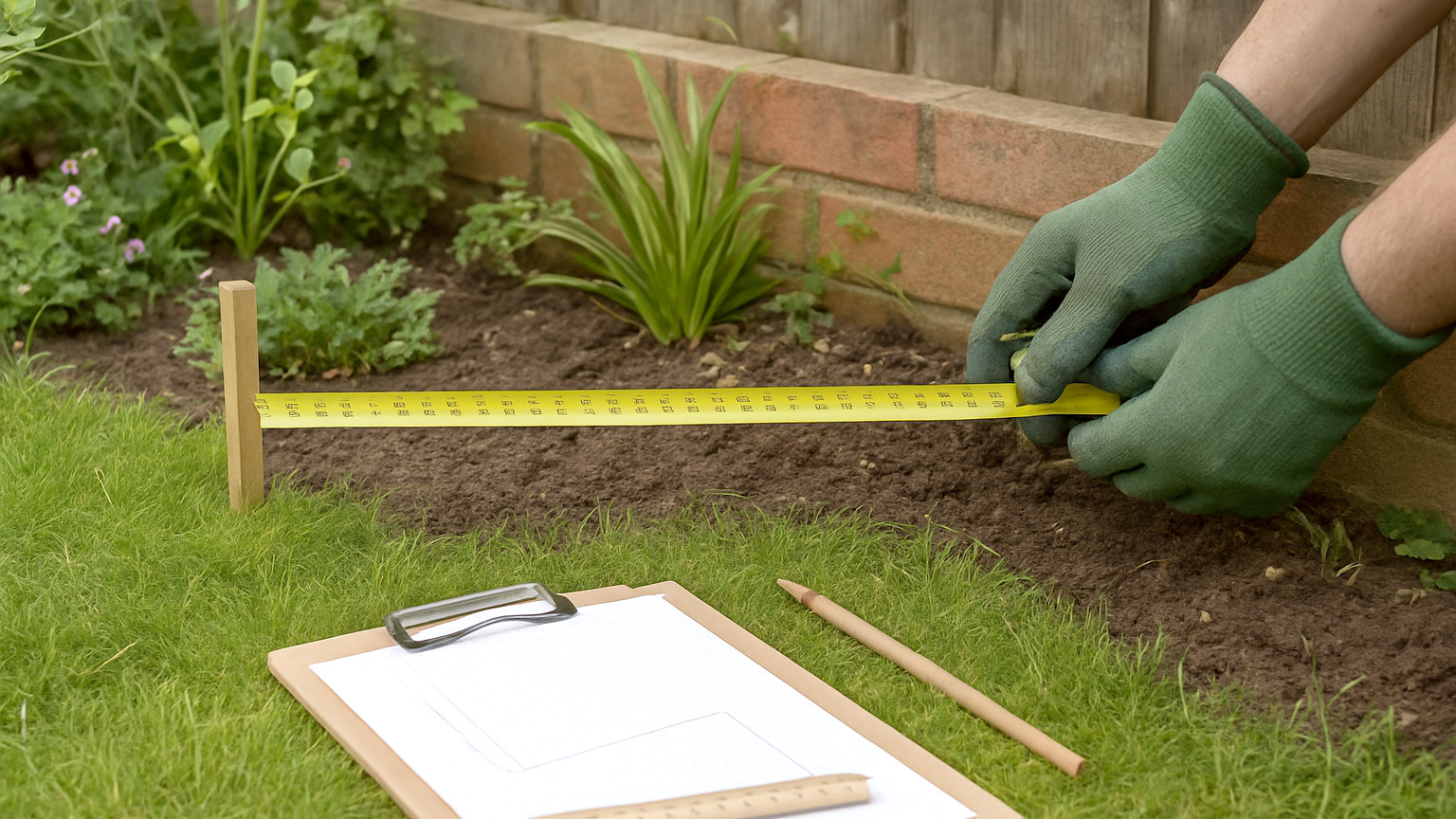
Run the tape along each boundary in turn and record the lengths. For a rectangular plot that is nearly the whole job.
Few gardens are truly rectangular, so check the diagonals. Measure corner to opposite corner both ways: if the two diagonals are equal the plot is a true rectangle, and if they differ the plot is out of square by that difference. Recording both diagonals lets you draw the shape accurately.
For an irregular plot, use triangulation. Pick two fixed points a known distance apart, usually the two rear corners of the house. Measure from each of them to the feature you are locating. Then on your drawing, set a compass to each distance in turn, scribe an arc from each fixed point, and where the arcs cross is the position. It sounds fussy and it is the only reliable way to place a tree or an awkward corner accurately.
What else to record
Everything you cannot easily move.
- Manhole covers, drains, gullies and any inspection chamber
- Outside taps, meter boxes, air bricks and vents
- Established trees, with the trunk position and the spread of the canopy
- The shed, greenhouse, oil tank, washing line and bin store
- Overhead cables and any obvious route for underground services
- Changes in level, and roughly how much
- Which way the ground slopes, and where water collects after rain
Manhole covers in particular catch people out, since you cannot build over them and a patio designed without noting one has to be redesigned.
Levels
Most gardens slope, and slope determines what a project costs more than almost anything else. A rough measurement is enough at this stage.
Drive a peg in at the top of the slope and another at the bottom, run a string line between them, check it with a spirit level, and measure from the string down to the ground at the lower peg. That gives you the fall over that distance.
Anything more than about a third of a metre across a garden means retaining, steps or terracing, all of which are substantial jobs.
Sun and shade
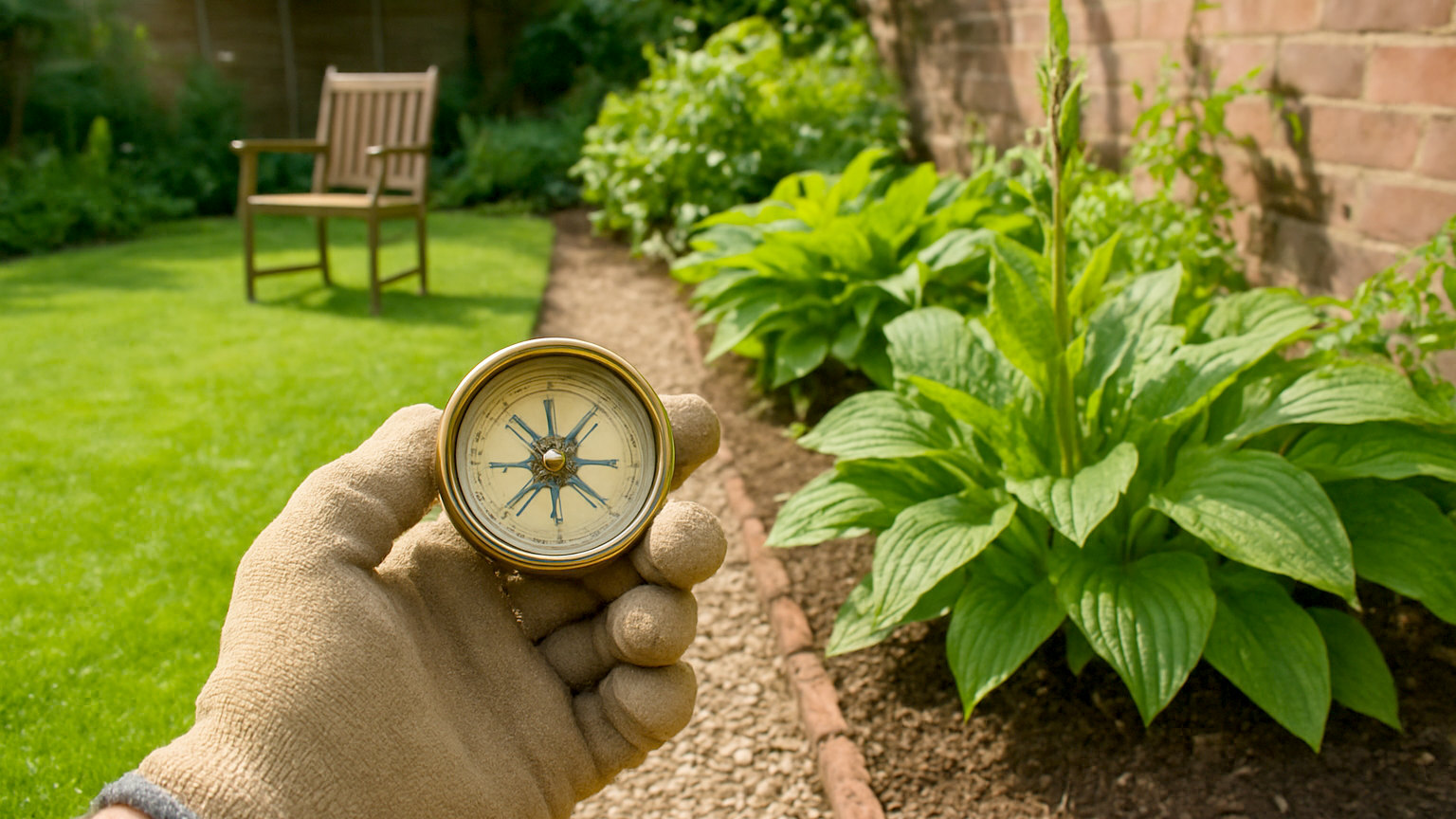
Note which way the garden faces, using a compass or a phone. Then mark on the plan where shade falls at nine, twelve, three and six o'clock on a sunny day. Repeat in a different season if you can, since the sun is much lower in spring and autumn.
This is the step people skip and the one that changes designs most. The corner you assumed would take a seating area is frequently in shade by six, which is exactly when you would want to sit there.
Drawing it up
Transfer the measurements to squared paper at your chosen scale, starting from the house wall and working outwards. Draw the boundaries, then everything fixed.
Then take photocopies, or trace over it, and use the copies to sketch ideas. Working on copies means you can try five layouts without redrawing the survey each time.
Test it outside before you build
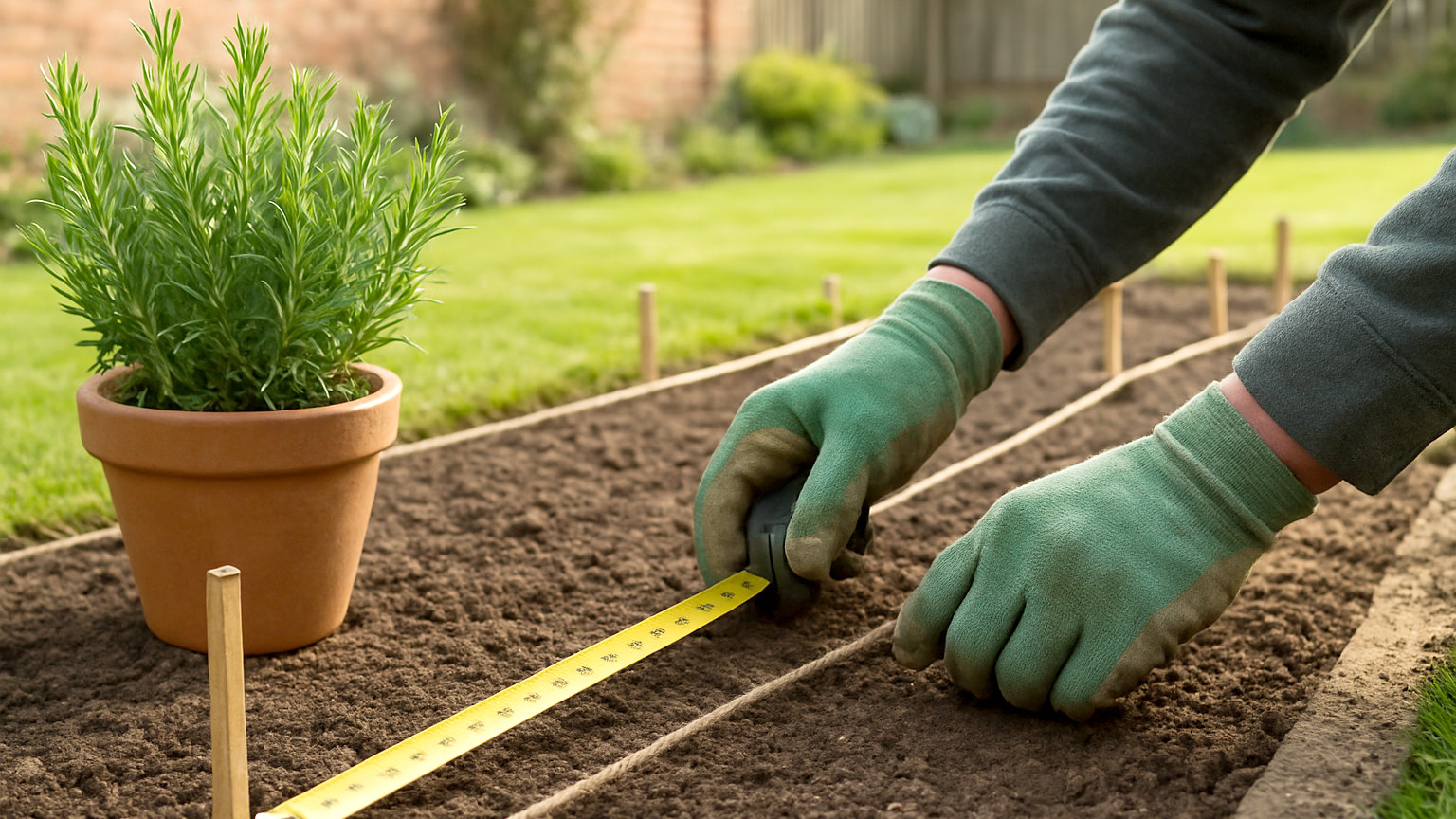
When a plan looks right on paper, mark it out on the ground with sand, canes, rope or cardboard boxes and leave it for a fortnight.
Walk it, sit in it, look at it from the kitchen window in the rain. Almost everyone changes something, and moving a line of sand costs nothing while moving a laid patio costs a great deal.